
ortelgarden
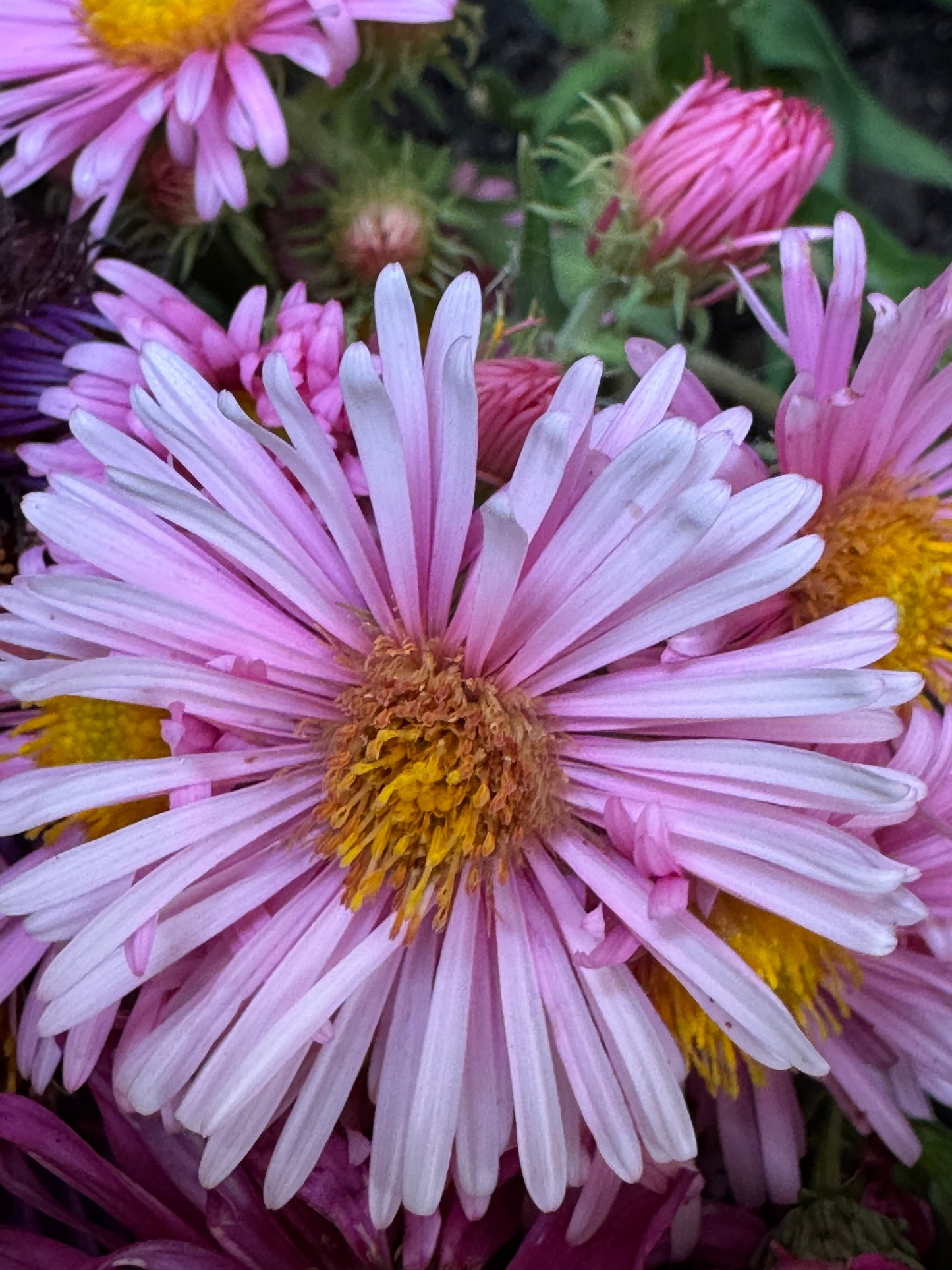
Symphyotrichum novi-angliae (Aster) Pink selection
Symphyotrichum novi-angliae (Aster) Pink selection
Couldn't load pickup availability
Michaelmas daisies. An essential border plant. Clusters of soft pink daisy-like flowers. Mildew free, don’t need staking and come in many colours and heights.
Michaelmas daisies step forward from backstage, and put on their show at just the time it’s needed. Their rich jewel-like colours are the perfect complement to autumn’s fading golds and burnished reds,
|
This has many ray florets (the "petals" we see) and is a lovely pink. Over a meter tall with hairy leaves. Sturdy and relatively woody stems. Late summer wonder until the frosts. Taller than the New York asters, S. novi-belgii. You can give mature plants the ‘Chelsea chop’, and remove growing tips at the front of clumps to promote more flowers at a lower level. Coinciding with the RHS Chelsea Flower Show in May (November for us) this is a pruning method by which you limit the size and control the flowering season of many herbaceous plants. This species has hairy leaves. Their central disc is surrounded by an outer ray of single or semi-double petals “They do have quite woody stems and lack interest from the neck down, so they are best placed towards the back of the border, or among other tall plants and grasses, to bring freshness to an otherwise fading display. As the ultimate bee and butterfly magnet, asters seem to have an optimistic disregard for the oncoming winter,” says Brian Ellis, the plantsman and nurseryman who formerly looked after the National Collection of these plants. New England Asters originate in Canada and the US. They were introduced to the UK in the early 18th century from the New England region of the US. Previously called Aster novae-angliae, they have now been renamed. Originally deep purple at 160cm they live in full sun. Self supporting and elegant, naturally found on stream banks. So not too dry, but ordinary garden soil with some water. ID. Perennial guru Allan Armitage had to say this about aster ID in his book, "Herbaceous Perennial Plants: "So much hybridization has occurred in cultivation that proper identification is highly questionable. If you don't know what species you are looking at, don't worry about it. It is probably a hybrid of some kind." There are differences between the New England (this one) and the New York or novi-belgii asters (latin for new Belgium, an alternative name for the area, but are widespread American prairie plants). New England: "The entire 4- to 5-inch long leaves are numerous and very hairy. The two basal lobes of the leaves clasp the stem, poking out on either side. The flowers are 1½- to 2 inches across and consist of 40-50 ray flowers surrounding a yellow center." New York: "The smooth or nearly glabrous (hairless) leaves differentiate them from New England asters. The leaves clasp the stem similar to New England asters, but flowers normally have only 15-25 ray flowers |
Share