

ortelgarden
Cyclamen graecum
Cyclamen graecum
Couldn't load pickup availability
The best for autumn and will naturalise too, white or pink and the loveliest velvet-like jewelled leaves.
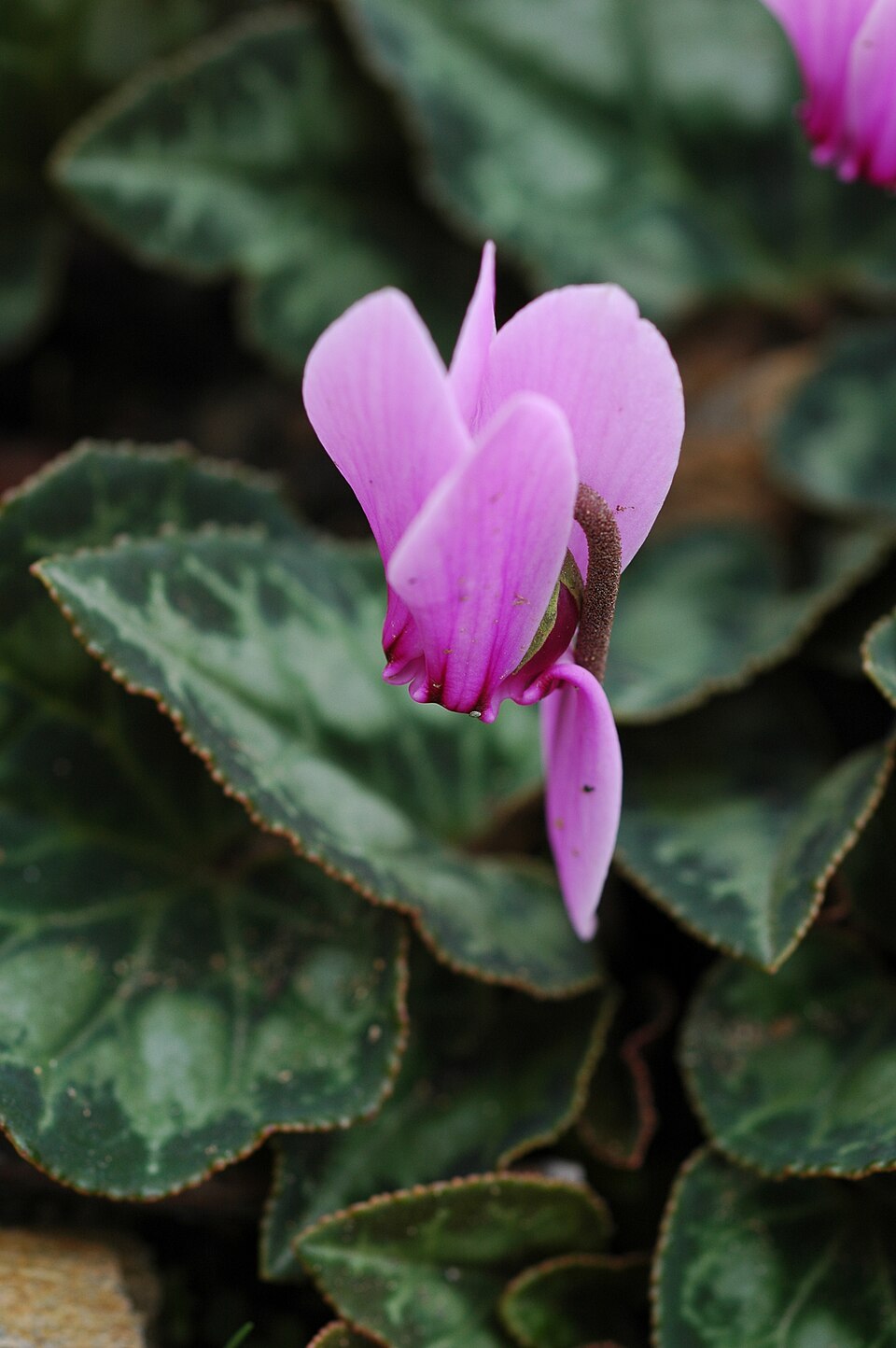
Greek cyclamen southern Greece and Crete. Autumn flowering. Shimmering foliage with various mottled grey sand greens. The corolla lobes are reflexed, pointed and twisted (15-25mm) Darker lines on each one merge into a deeper coloured area at the nose of the flower, which has prominent auricles. Unusually among cyclamen, after fertilisation the flower stalk begins to coil from the middle rather than the top as in most species. Subspecies candicum has a white or very pale pink corolla with darker, purple lines, more prominent auricles and a wider mouth to the flower. Thanks to the cyclamen society for this information (they have a great see list for members)
Maritime Mediterranean conditions, warm wet winters and hot dry summers, so Northern European sources say best in a large, deep pot, if we provide a tree or shrub for protection these cyclamen can reach great sizes, (but perhaps not in Central Otago)
The Ivy-leaved cyclamen is a hardy and vigorous cyclamen. As stated, from the Mediterranean regions but it has naturalised further north and into the Pacific Northwest. The tuber can live a long time and get very large, blooming and leafing up in Autumn and through winter here becoming dormant in summer when the seed ripens. The flower stalks roll around the ripening pod. Ants carry the seeds off to eat the sticky coating. Colours white or pink. At this stage they are have not flowered but will in autumn. Largest plants sold form the trays.old, large tubers. Sun in autumn, winter and spring. Since they die down in summer they can cope with being inundated by other bulbs from spring onwards. The second image shows a single plant in the Peleponnese, think about informally planting on drier sites too for a med vibe.
KPFC, CC BY-SA 4.0 <https://creativecommons.org/licenses/by-sa/4.0>, via Wikimedia Commons
Share